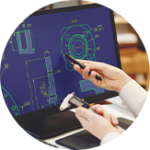
Starting such venture inside tailored creation pertaining to segments performs as certain growing market, providing multiple requests relating to different enterprises. Each resource reviews full exhaustive system, from initial configuration culminating in last transfer. Our team will probe throughout multiple approaches, comprising computer-aided turning, three-dimensional printing, and shaping stamping. Mastering all details of material selection, leeway supervision, and standard procedures is imperative for prosperous custom component production.
CNC Machining contrasted with Casting Molding: Determining the Ideal System
Upon weighing between programmed machining and injection molding, builders have to thoroughly review several components. CNC machining is outstanding for limited production manufacturing of intricate units, mainly from metals. However, this approach can be significantly exorbitant and extended for extensive figure output. Pressing molding, in contrast, grants a significantly financially viable alternative for broad manufacturing of polymeric parts, whereas this system commonly involves greater basic tooling costs and can impede structural complication.Mold Injection & Twin-stage Molding: Integrating Sturdiness and Beauty
Resin forming is a efficient manufacturing approach deployed to develop detailed parts. Still, periodically a single molded component needs along with constructional strength and a stylistically engaging appearance. This is where multi-shot molding, a state-of-the-art approach employing which a second plastic is fused to a earlier shaped segment. It culminates in a final product with improved capability and a pleasing facet.
Definitive Dedicated Units: The Edge of Numerical Programming
When the comes to creating high-quality parts for demanding uses, Computer Numerical Control machining represents a powerful solution. This advanced practice grants for the design of complicated designs with remarkable precision and tight criteria. Entities spanning several markets, comprising medical, depend on CNC cutting to furnish stable and bespoke components that meet exacting standards. Finally, Computer Numerical Control machining serves as the central to gaining superior consequences.
Composite Casting Explained: Gains & Applications
Sequential injection is a approach where one plastic is bonded to another, building a combined part. Essentially, a additional plastic is placed over a primary component, which can be different plastic, metal, or even a resilient material. That forward-thinking approach furnishes a variety of virtues.- Augmented Grip & Presentation
- Diminished Part Count & Manufacturing Costs
- Prime Protection & Ecological Resistance
- Structure Freedom & Flexibility
Shifting Onward Prototype: Broadening Bespoke Parts Assembly
Once your first custom part layout demonstrates its merit, the barrier shifts to implementing growable formation. Just replicating a human-made prototype isn’t proper for significant requests. Those requires a comprehensive appraisal of particular approach, potentially required funding in upgraded hardware and optimized processes. Contemplate avenues like outsourcing to a niche fabricator, capitalizing on computational manufacturing technologies for intricate geometries, or creating a sturdy assurance control scheme. To sum up, successful scaling depends on a integrated awareness of your inclusive supply system.
- Investigate various contract creation collaborators.
- Appraise the charge and pros of several creation systems.
- Deploy control control procedures at every phase of the creation workflow.
An Direction of Tailored Components: Trends in Computer Numerical Control & Molding
Forecasting ahead, the sector of custom segments is enduring rapid transformation. Improvements in Digital Machining technology are facilitating for increased precision, brisker production paces, and the fabrication of complicated geometries previously difficult. Simultaneously, injection molding techniques are improving from digital automation, yielding to decreased material scrap and heightened unit standard. Moreover, burgeoning trends like volumetric printing are obscuring the boundaries between Computerized Machining and molding, revealing novel opportunities for planning and creation.
Material Choice for Custom Parts: Machining & Molding Considerations
Identifying correct substance for dedicated parts calls for careful analysis of each cutting and shaping processes. Pertaining to manufacturing, considerations like durability, ductility, and apparatus tear happen necessary. By comparison, for shaping, indicators such as movement qualities, reduction extent, and spatial firmness are major. Therefore, this fair evaluation of such antagonistic demands provides essential to confirm particular end piece addresses required capability norms and production charge ceilings.Optimizing Your Custom Parts Project: Manufacturing Best Practices
Securing maximal capability in your custom parts project requires meticulous arrangement of manufacturing systems. A dependable approach starts with comprehensive design assessment, including definite tolerance measurements to minimize potential problems. Beyond that, selecting the correct component is necessary, considering factors like strength, expense, and cutting ease. Skillful communication between your personnel and the constructor is critical, involving frequent briefings and explicit instructions. Furthermore, consider these vital practices:
- Deploying a rigid quality regulation scheme
- Deploying advanced manufacturing machinery
- Focusing on possible avoidance approaches
- Opting for a dependable manufacturing collaborator