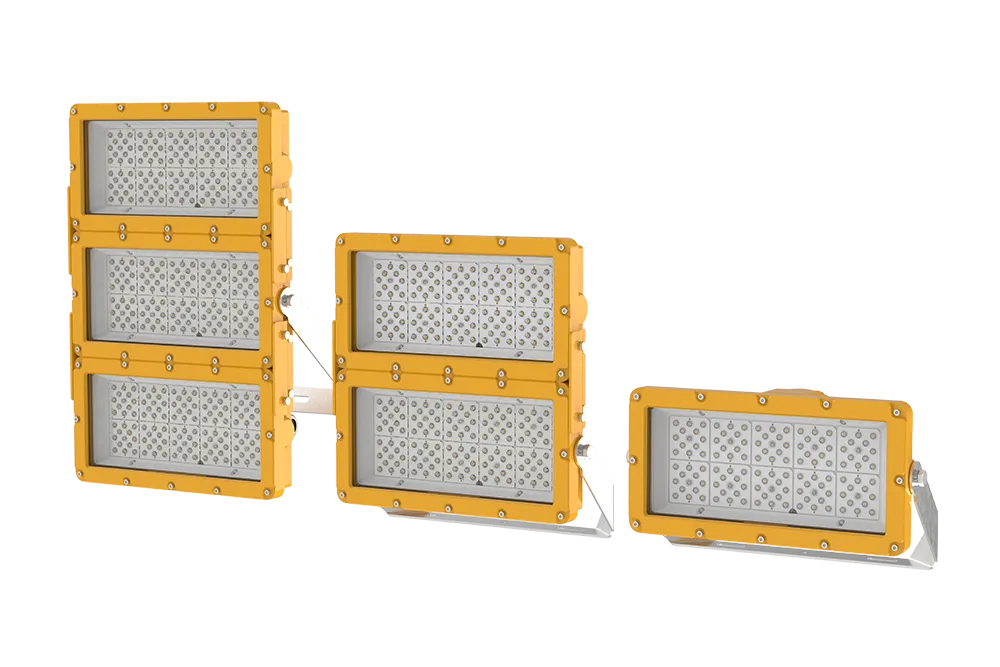
Commencing our piece explores these approaches relating to detonation-proof luminaires within operational zones.
Working safely alongside perilous places such as manufacturing factories commands designed tools meant to reduce possible emergencies. Ignition-safe fixtures are fundamental features in such zones, engineered to survive ignitions, ignitable gases, and highly reactive airspaces. Multiple units are not fundamentally risk-free; in contrast they are constructed to sequester any enclosed electrical fault or ignition and restrict it from igniting a more extensive discharge in the adjacent setting. This exposition presents significant information about explosion-proof fixtures, their operations, and safety concerns for utilizing them diligently.
Grasping Explosion Proof Lighting Standards
Complying with prescribed intrinsically safe lighting criteria can be elaborate, especially for fields working with hazardous spaces. These requirements – often stemming from regional bodies for instance the National Electrical Authority (NEC), ATEX (Europe), and IEC – dictate stringent design and deployment steps to limit the likelihood of ignition from lighting devices. Understanding aforementioned standards is necessary for ensuring laborer safety and fulfillment with regulatory responsibilities.
Electroluminescent Fire Safe Lights: Performance & Security
Luminescent blast-proof illumination sources exhibit a notable boost over conventional gas-discharge systems in sites where ignitable fumes are existing. These reliable systems simply provide exceptional reduced energy consumption, meaning reduced operating costs, but fundamentally support a elevated quality of prophylaxis by minimizing the chance of fire outbreaks owing to current breakdowns}.
Explosion Rated Risky Location Treacherous Proof Flame Burn Ignition Resistant} Systems : A In-depth Review
Explosion Rated Hazardous Setting Unsafe Proof} Luminaires are particularly manufactured lighting tools built to work safely within conceivably inflammable areas. These robust fixtures block sparks, energy and voltage streams from causing a grave explosion. They frequently incorporate unique designs, employing namely sealed housings and by nature safe power assemblies to provide safety codes in markets like oil & combustible gas processing, manufacturing plants, ore processing operations, and drug production.
Electing the Appropriate Spark-Proof Fixtures for Unsafe Sites
Figuring out the best detonation-safe illumination for a targeted potentially explosive environment involves thorough review. Factors such as the categorization (e.g., Level I, II, or III and areas A) shall be correctly examined to ensure observance with corresponding security laws. Excluding the region's basic risks, assess natural circumstances, covering warmth and atmospheric moisture, to locate a hardy and dependable method. Frequently check a trained engineer to lead your selection process.
Sites Where Apply Explosion Proof Lights?
Explosion-proof commonly known as intrinsically safe|hazardous location|Class-rated} lights are essentially needed in various areas where ignitable emissions or pollutants could can create a dangerous atmosphere. This usually includes manufacturing manufacturing plants, varnish application areas, crop handling facilities, and liquid waste treatment zones. Regulations, such as those from OSHA and UL, order their fitting in these sectors to deter the risk of ignition and ensure operational integrity.
Benefits of LED in Intrinsically Safe Illumination
Transitioning to Light Emitting Diode technology for intrinsically safe lighting offers a significant selection of upsides. First, electroluminescent units boast a noticeably longer use span compared to traditional fluorescent fixtures, reducing repair charges and interruptions. They are also inherently safer, producing mitigated radiant heat which curtails the potential of combustion in hazardous atmospheres. Over and above, electroluminescent units are progressively effective in power use, leading to reduced electricity outlays and a cut down carbon influence. Finally, the strong make of Crystal-Based components bears the demanding conditions typical of detonation-safe areas.
- Prolonged Operating Life
- Curtailed Repair Costs
- Heightened Risk Management
- Lower Current Costs
- Heightened Toughness
Maintaining and Evaluating Explosion Proof Lighting Systems
Periodic checking and exhaustive survey of blast-proof lighting systems are decisively crucial for confirming operational integrity and curbing potential risks. This covers a routine review of all pieces, such as lamps, pipes, cabling, and attached connection boxes. Particularly, check for deterioration, body damage, and sufficient ground connection. Moreover, validate that total tags are understandable and that the illumination fulfills mandated regulations.
- Execute eye inspections.
- Evaluate electrical joints.
- Establish blast resistance.
Next Generation of Explosion Proof Lighting Technology
Maturing landscape of explosion-proof lighting technology presents a major shift from traditional designs. Future tools will broadly incorporate intelligent capabilities, enabling distant monitoring, diagnostics, and programmable control. We predict a broadening adoption of crystal-based technology, not only for its primary energy efficiency, but also its skill to facilitate integrated sensors for identifying dangerous conditions. Additionally, materials analysis is propelling innovations in strong container materials, allowing for slimmer and advanced designs, while upholding explosion proof led light fixtures the compulsory levels of safeguarding.
- Upgraded battery life for flexible applications.
- Consolidation with forecasting maintenance networks.
- Implementation of auto-purging lens arrangements.